
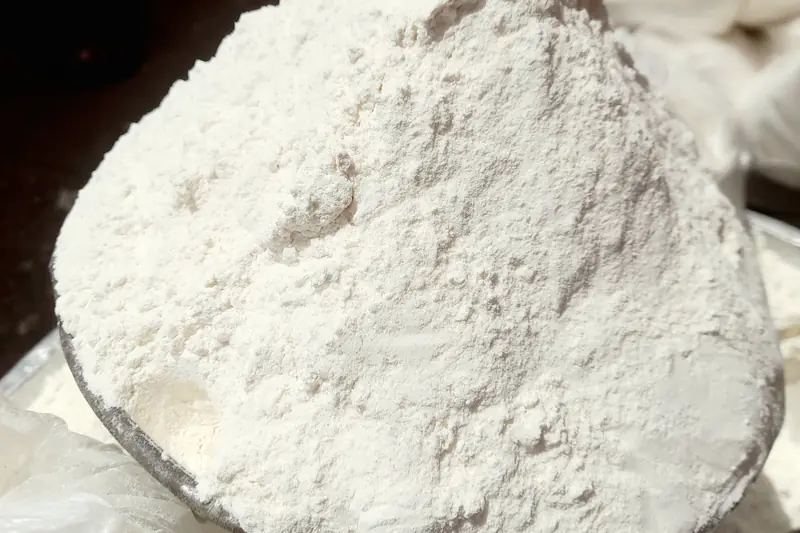
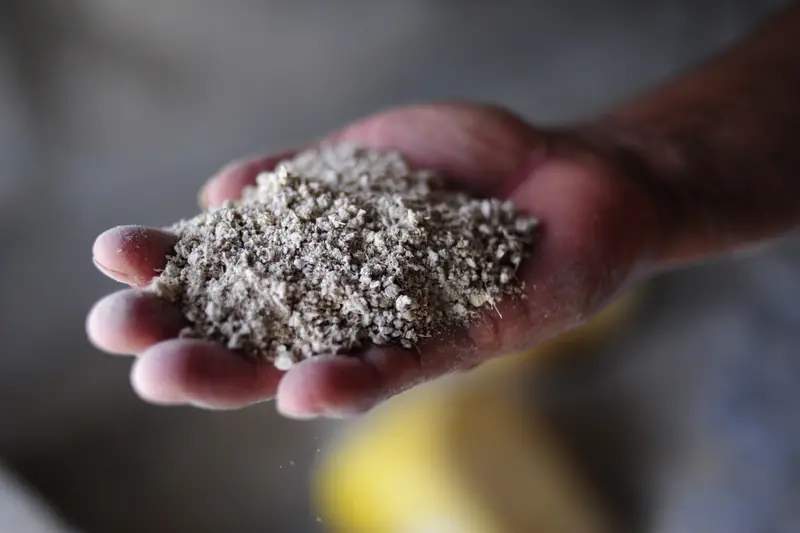
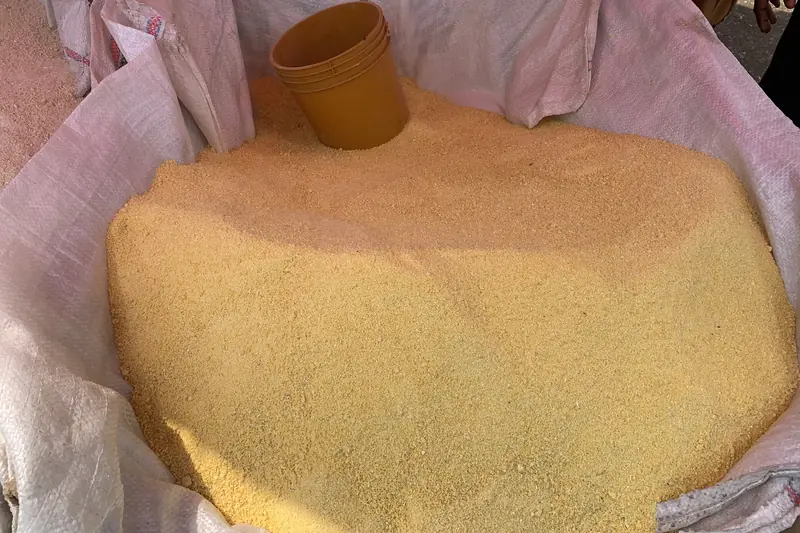
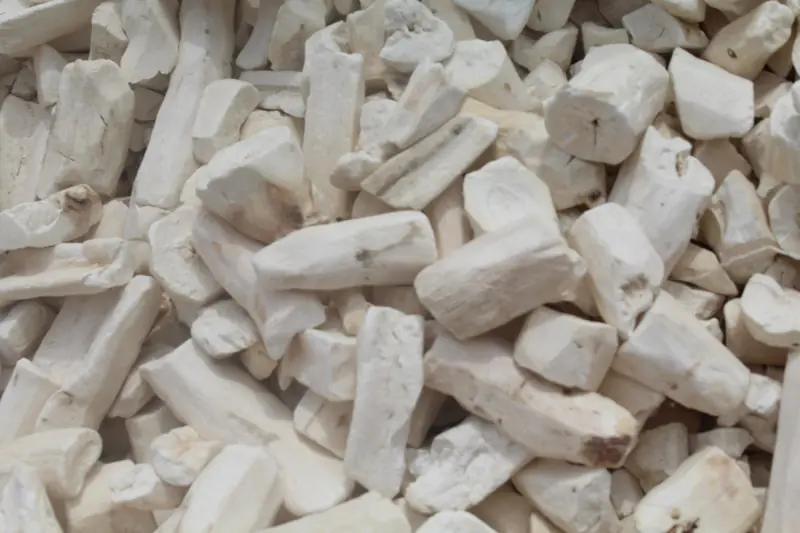
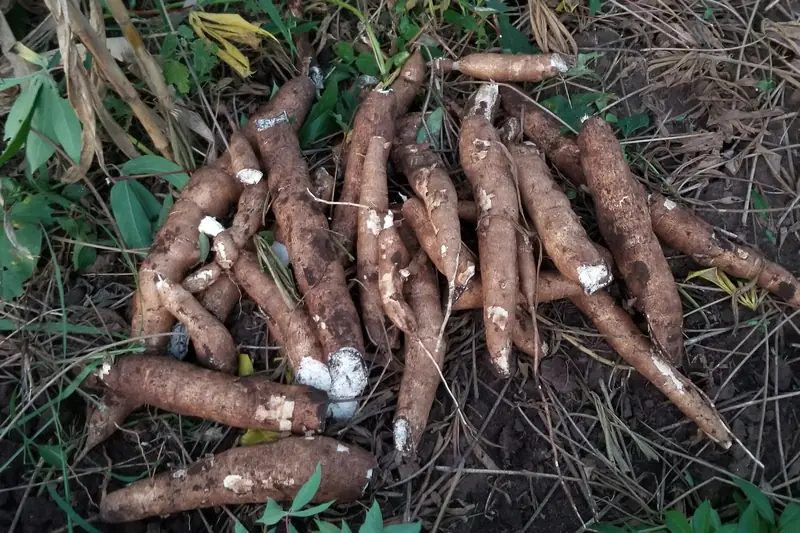
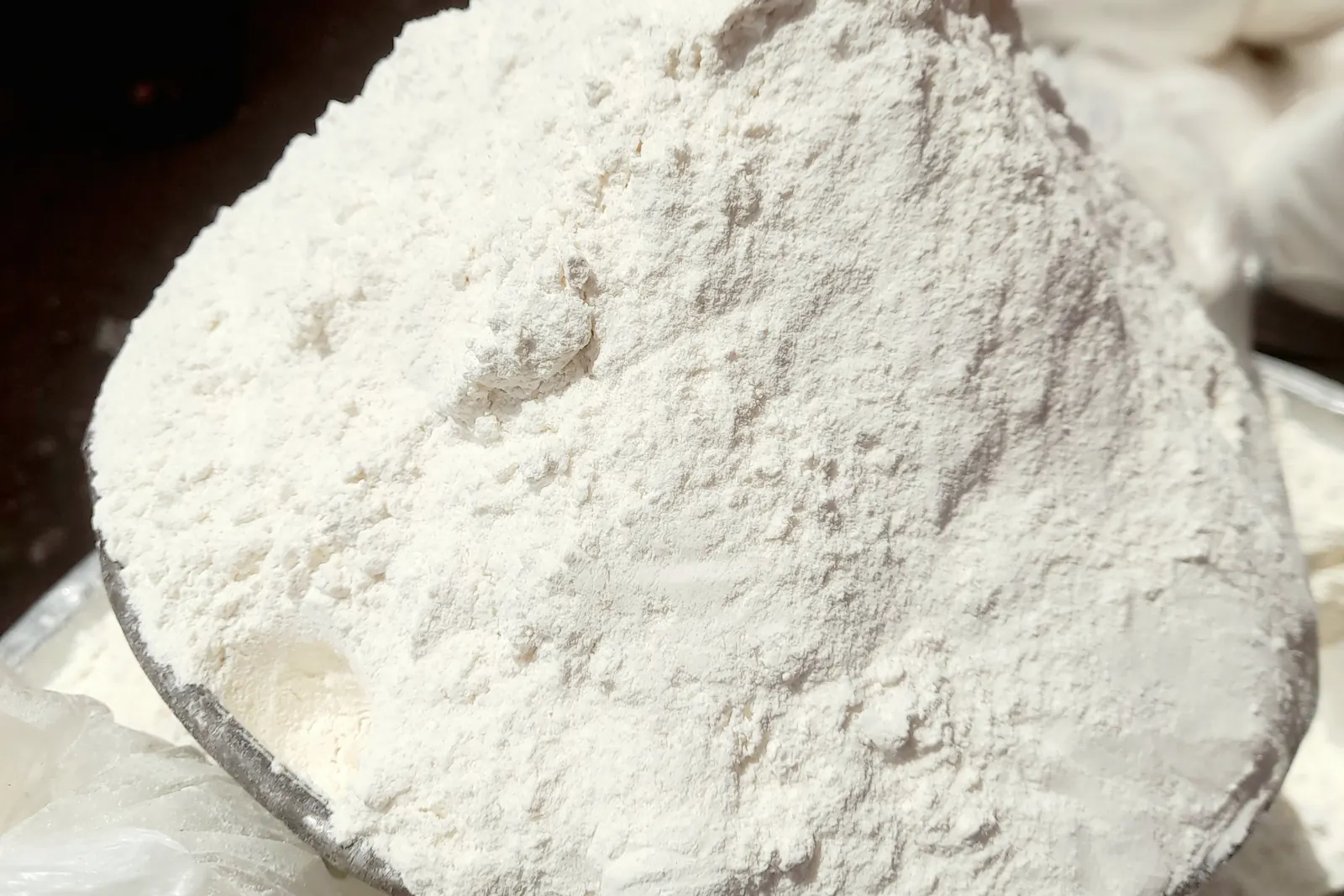
High-quality cassava flour, usually shortened to HQCF, is a fine, white flour made from fresh cassava roots. The word that matters is fresh: the roots are peeled, grated, pressed and dried within hours of harvest, before they have time to ferment. That speed is what separates HQCF from the traditional fermented flours of West Africa, which are sour and darker.
How it is made
- Roots are peeled and washed soon after harvest.
- They are grated to a pulp and pressed to squeeze out water.
- The pressed cake is broken up and dried quickly to a low moisture.
- The dry flakes are milled and sieved to the agreed fineness, then bagged.
Because it is never left to ferment, HQCF has a neutral taste and a low acidity, and it stays white. Those three things are what bakers notice first.
What bakers use it for
Cassava contains no gluten, so HQCF does not build the stretchy dough that wheat does. That shapes how it is used:
- As a partial replacement for wheat in bread and rolls, in composite flours.
- In biscuits, crackers and cakes, where a tender, crisp bite is wanted rather than a chewy one.
- In snacks, batters and coatings, where its neutral taste lets other flavours lead.
- In recipes made for people who avoid gluten, with the testing a gluten-free claim needs in your market.
How much wheat a baker can replace depends on the product and the rest of the recipe. The honest answer is to trial it: start with a small share, then increase it while the loaf or biscuit still meets your standard.
What to ask a supplier for
| Parameter | Why it matters |
|---|---|
| Moisture | Shelf life, and how the flour behaves in the mixer. |
| Particle size | Fineness affects texture and how evenly the flour blends. |
| Colour | A whiter flour gives a lighter crumb and crust. |
| Acidity (pH) | Shows the roots were processed fresh, not fermented. |
| Residual cyanide | A food-safety limit set by your market; ask for it on every certificate of analysis. |
| Microbial counts | Hygiene during drying and milling. |
Ask for samples before the first order, a specification sheet both sides sign, and a certificate of analysis for each lot. A supplier who will not put the numbers in writing is telling you something.