
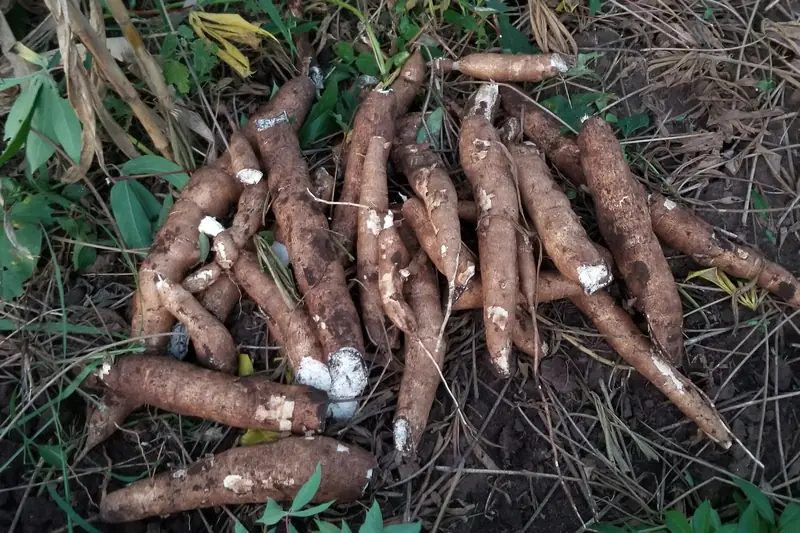
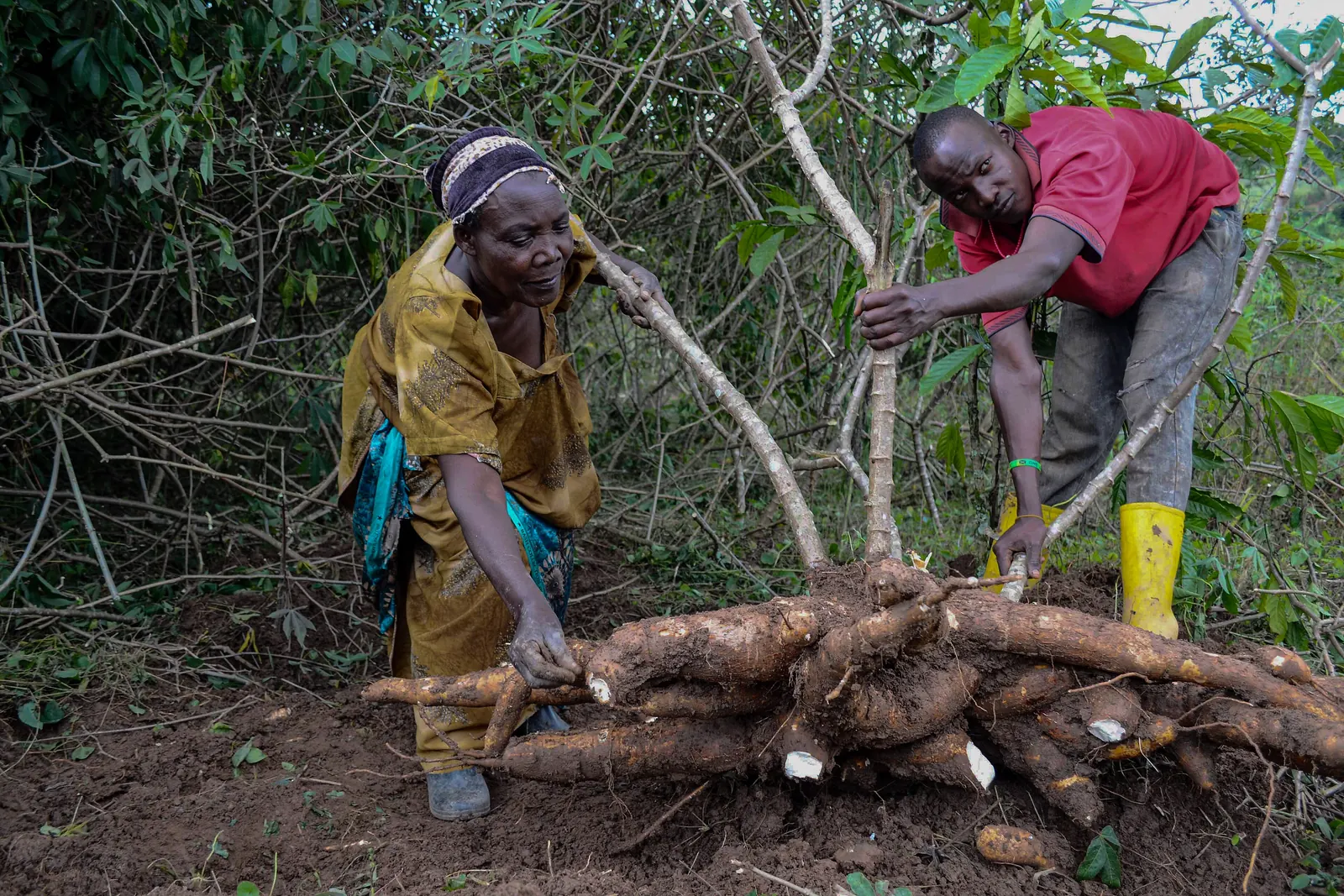
Cassava is one of the hardiest crops a farmer can grow. It survives poor soil and dry spells, and the roots can stay in the ground for months until they are needed. Yet once a root is lifted, it starts to spoil within two to three days. That contrast shapes the whole cassava business.
What happens after harvest
Within a day or two of lifting, the root begins to discolour from the inside: blue-black streaks spread through the white flesh. The process is a reaction of the root's own tissue to being cut off from the plant, and microbial rot follows soon after. Damaged and bruised roots go first.
Why it matters to a buyer
- Flour made from roots that waited too long is darker and less consistent.
- Starch yield falls as the root deteriorates.
- A supplier who buys roots from open markets cannot know how long they have been out of the ground.
How a supplier plans around it
The answer is not to rush at the end, but to plan from the start. Harvest dates are agreed with farmers so roots are lifted when there is room to process them. Collection follows the harvest on the same day where possible, and every delivery is recorded with its date, so the time since harvest can be checked at intake. Once the product is dried, the clock that matters is shelf life, not hours.
On our Farm to Port page, the freshness clock shows how we plan collection and processing inside that window.